
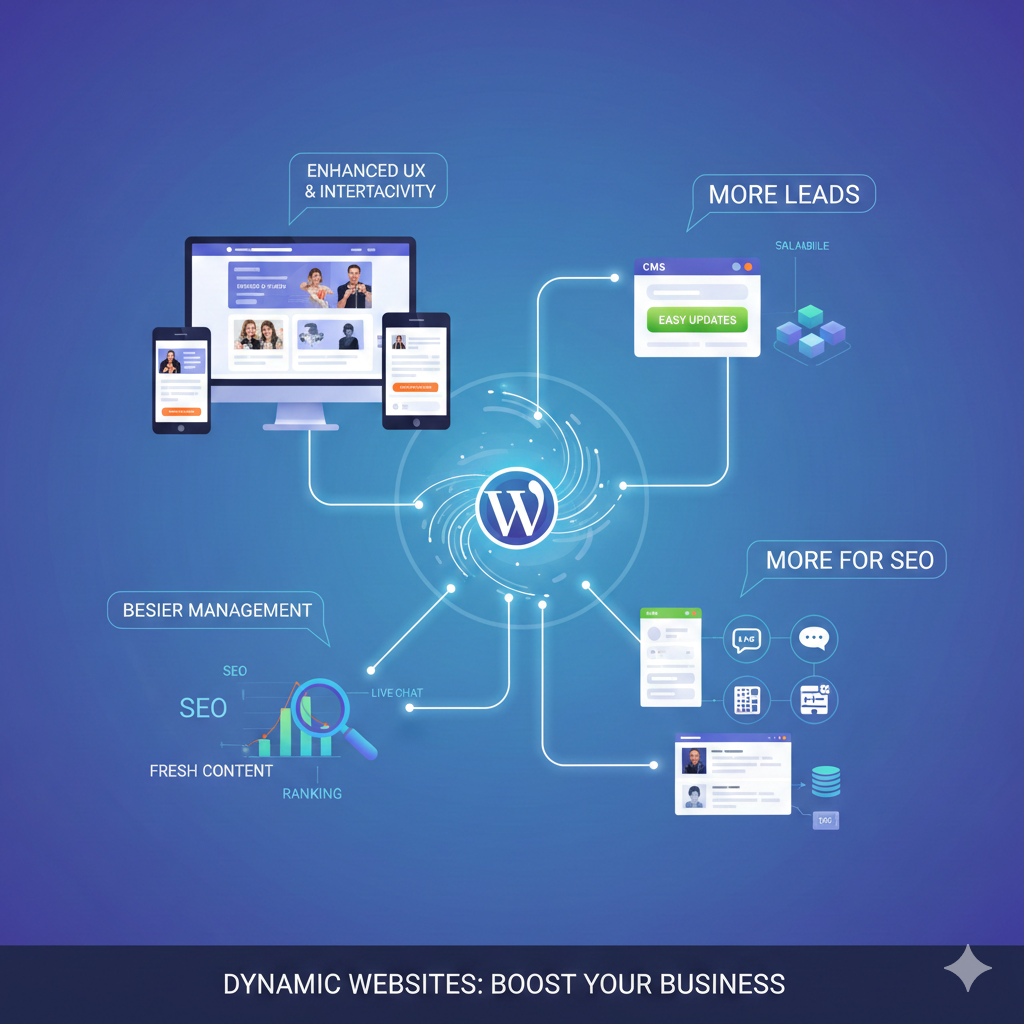
🚀 Benefits of a Dynamic Website
1. Enhanced User Experience (UX) and Interactivity
- Personalized Content: Dynamic sites can tailor content, product recommendations, or calls-to-action (CTAs) based on a visitor’s past behavior, demographics, or current location.
- Greater Functionality: They support interactive features like search bars, product filters, user logins/accounts, shopping carts, live chat, forums, and commenting systems, making the site more useful and engaging.
- Responsiveness: Dynamic websites are generally built to be responsive, providing an optimal viewing and interaction experience across all devices (desktops, tablets, and phones).
2. Easier Management and Scalability
- Easy Updates: Content is typically managed through a Content Management System (CMS) like WordPress or a database. This allows non-technical users to update and publish new content (blogs, product listings, news) quickly and easily without needing to edit code.
- Scalability: They can easily handle large volumes of content, a high number of users, and the integration of new features as your business grows.
3. Better for SEO
- Fresh Content: Dynamic sites make it easy to regularly publish fresh, high-quality content (like blogs and news articles). Search engines like Google favor websites that update frequently, which improves your Search Engine Optimization (SEO) ranking and visibility.
- Comprehensive Indexing: By generating a large number of structured, relevant pages (e.g., product pages from a database), dynamic sites offer more content for search engines to index, helping you rank for more keywords.
📈 How a Dynamic Website Helps Generate More Leads
The features of a dynamic website directly contribute to a more effective lead generation strategy:
1. Personalized Calls-to-Action (CTAs) and Forms
- Targeted Offers: You can dynamically change the CTA button or offer based on where a visitor is in the buying journey or what page they are viewing. For example, a first-time visitor might see a “Download Free Guide” CTA, while a returning visitor might see a more direct “Request a Demo” or “Contact Sales” CTA.
- Pre-filled Forms: If a returning lead has provided their name and email before, a dynamic form can recognize them and pre-fill that information, asking only for new data, which increases conversion rates.
2. Increased Engagement Drives Conversions
- Interactive Tools: Dynamic features like calculators, quizzes, and live chat are excellent lead magnets. A user might use a calculator on your site and then be prompted to provide their email to receive the full results or a custom report.
- Improved User Flow: Personalized recommendations and clear, intuitive navigation (like multi-step forms or smart filters) keep users on your site longer, guiding them smoothly toward conversion pages.
3. Data Collection and Analysis
- Tracking User Behavior: Dynamic websites can track user activity in real-time (clicks, time on page, pages visited). This data is stored in the database and can be used to understand what content converts best and identify where leads are dropping off.
- Integration with CRM: Dynamic sites easily integrate with Customer Relationship Management (CRM) systems and email marketing tools. When a visitor fills out a form, their data is instantly logged, allowing your sales team to follow up promptly and effectively.
In summary, a dynamic website uses flexibility and interactivity to create a more relevant and engaging experience for each individual visitor, which in turn maximizes the chance of converting that visitor into a qualified lead.
